When the lights go out, a standby generator can be a true lifeline, offering peace of mind and uninterrupted power. But a generator alone isn't the whole story. To safely and effectively harness that power, you need an often-unsung hero: the transfer switch. Understanding Standby Generator Installation & Automatic Transfer Switches is crucial for anyone considering this essential home upgrade, ensuring both safety and seamless operation during an outage.
Think of the transfer switch as the sophisticated traffic controller for your home's electricity. It's the device that safely manages the flow of power, deciding whether your home runs on utility grid electricity or your generator's output. Without it, connecting a generator directly to your home's electrical system is not only illegal but extremely dangerous.
At a Glance: Your Transfer Switch Essentials
- Safety First: A transfer switch is legally required to prevent dangerous "backfeeding" electricity into the utility grid, protecting linemen and preventing electrocution.
- Two Main Types: Choose between Manual Transfer Switches (hands-on operation) or Automatic Transfer Switches (ATS) (seamless, hands-off).
- The ATS Advantage: Ideal for standby generators, an ATS detects outages, starts your generator, transfers power, and reverses the process automatically.
- Professional Installation is a Must: Due to significant safety risks and code requirements, transfer switches must be installed by a licensed electrician.
- Sizing Matters: Ensure your switch matches your home's electrical service and generator's output.
- Smart Features: Modern ATS options can prioritize circuits, allowing smaller generators to power more of your home efficiently.
The Unseen Hero: Why Transfer Switches Are Non-Negotiable
A transfer switch isn't just a convenience; it's a fundamental safety device and a legal requirement for connecting a generator to your home. Here’s why it’s absolutely essential:
- Protects Utility Workers (and You): The most critical function of a transfer switch is to prevent "backfeeding." Imagine your generator sending electricity back into the utility grid during an outage. This power could travel down power lines, energizing them unexpectedly and creating a deadly electrocution hazard for utility workers who are trying to restore power. A transfer switch creates a clear separation, ensuring your home is connected to either the grid or the generator, never both simultaneously.
- Safeguards Your Home's Electrical System: Connecting a generator directly to your main panel without a transfer switch risks damaging your home's wiring, appliances, and even the generator itself if utility power suddenly returns while the generator is running. The transfer switch protects your equipment from potential surges and conflicts between power sources.
- Required by Code: The National Electrical Code (NEC) and most local building codes mandate the use of a transfer switch for any generator installation that directly powers your home's circuits. Attempting to bypass this requirement is not only illegal but could void your home insurance policy in the event of an electrical incident.
- Convenience and Functionality: Instead of running a spiderweb of extension cords throughout your house, a transfer switch allows your generator to power your existing light fixtures, outlets, and hardwired appliances. This integrates your generator seamlessly into your home's infrastructure, turning an otherwise cumbersome process into a smooth operation.
Decoding Your Options: Manual vs. Automatic Transfer Switches
When it comes to choosing a transfer switch, the decision largely boils down to how much hands-on involvement you want during a power outage and the type of generator you're using. There are two primary categories: Manual Transfer Switches and Automatic Transfer Switches.
Manual Transfer Switches: Your Hands-On Power Solution
As the name suggests, a manual transfer switch requires human intervention to operate. When the utility power goes out, you'll need to physically start your generator and then flip a switch to transfer power from the utility to the generator.
How They Work (Step-by-Step):
- Outage Detected: Utility power fails, and your lights go out.
- Generator Start: You manually go outside, start your portable generator, and allow it to warm up and stabilize.
- Physical Transfer: You proceed to the transfer switch panel, which is usually mounted next to your main electrical panel. You then manually flip a handle or toggle switch from the "Utility" position to the "Generator" position.
- Power On: Selected circuits in your home (or the entire panel, depending on the switch type) are now powered by the generator.
- Utility Returns: When utility power is restored, you reverse the process: flip the switch back to "Utility," then shut down your generator.
Common Types of Manual Switches:
- Circuit-Level Transfer Switch: This is the most common residential type. It connects 6-10 (or more) specific circuits in your home (e.g., refrigerator, furnace, some lights, a few outlets) to the generator. You choose which essential circuits get power.
- Main Panel Transfer Switch: Less common for portables, these switches transfer power to your entire electrical panel, meaning the generator could power every circuit. However, you'd still need to be mindful of your generator's capacity and manually manage loads.
- Interlock Kits: While not a true transfer switch, an interlock kit is a simpler, more affordable mechanical device that prevents your main breaker and your generator breaker from being on simultaneously. It mounts to your existing main electrical panel. You manually shut off the main, plug in your generator, turn on the generator breaker, and then select individual circuits you want to power. It's a popular choice for larger portable generators where budget is a primary concern.
The Upsides:
- Cost-Effective: Manual transfer switches are significantly less expensive upfront, typically ranging from $300-$600 for the unit itself.
- Simpler Installation: Generally, the installation process is less complex and therefore less costly than an automatic system.
- Robust & Reliable: With fewer electronic components, they can be more resilient to power surges and require less complex maintenance.
- User Control: You decide precisely when to start the generator and which circuits to power.
- Portable Generator Friendly: They are the standard and most practical choice for portable generator setups.
The Downsides:
- Requires Presence: You must be home to operate the system during an outage.
- Delayed Power Restoration: There's a waiting period from when the power goes out until your chosen circuits are restored, involving manual steps in potentially dark or inclement weather.
- Safety Knowledge Required: You need to understand the proper, safe sequence of operation.
- Not for Standby Generators: By definition, a standby generator is designed for automatic operation; a manual switch defeats its primary purpose.
Best Used For:
Manual transfer switches are ideal for homeowners using portable generators for infrequent or shorter power outages, where budget is a significant consideration, and immediate, seamless power restoration isn't a top priority.
Automatic Transfer Switches (ATS): The Seamless Power Guardian
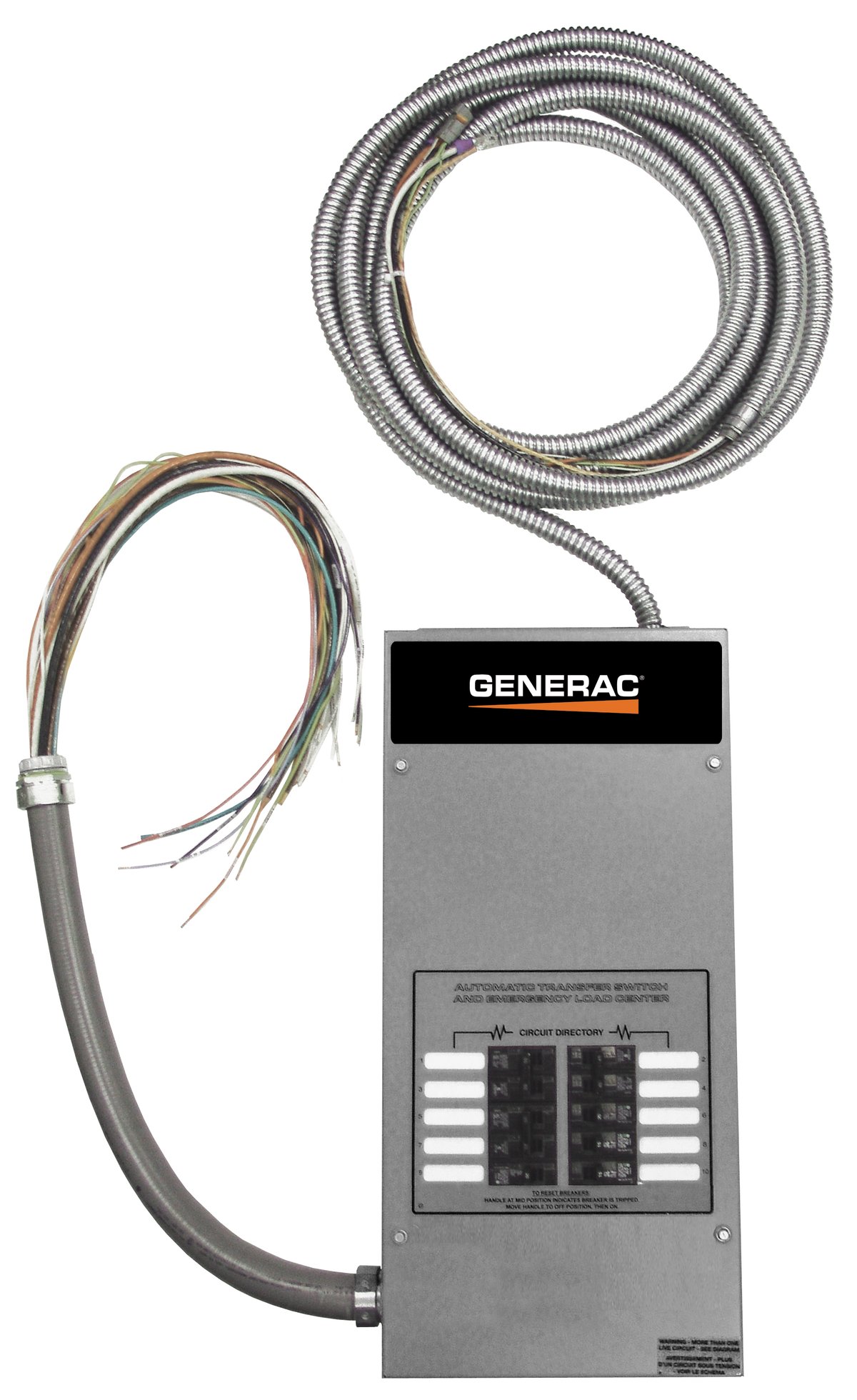
An Automatic Transfer Switch (ATS) is the backbone of any true standby generator system. It's designed to monitor utility power continuously and react instantly and automatically when an outage occurs. This hands-off operation is what makes standby generators such a powerful solution for reliable backup power.
How They Work (Step-by-Step):
- Constant Monitoring: The ATS constantly monitors the incoming utility power.
- Outage Detection: When utility power fails (or drops below a certain voltage threshold), the ATS detects it.
- Generator Start Signal: The ATS immediately sends a signal to your standby generator to start.
- Warm-Up & Stabilization: The generator cranks up and runs for a few seconds to warm up and ensure its voltage and frequency are stable.
- Automatic Transfer: The ATS then safely disconnects your home from the utility grid and connects it to the generator. This "break-before-make" action ensures there's no dangerous overlap. This entire process typically takes 10-30 seconds.
- Utility Returns: When utility power is restored and stable (the ATS usually waits 5-30 minutes to ensure stability, preventing "flicker" outages), the ATS automatically switches your home's power back to the utility grid.
- Generator Cooldown & Stop: The generator is signaled to enter a cooldown period (typically a few minutes to protect the engine) and then shuts down.
- Ready for Next Time: The ATS returns to its monitoring state, ready for the next event.
Key Types of ATS:
- Standard ATS: The most common type for residential whole-home standby systems. It can transfer the entire electrical load or a predetermined set of critical circuits.
- Smart/Managed ATS: These advanced units include load management features. They can prioritize circuits, shed non-essential loads (like air conditioning or electric dryers) if the generator's capacity is strained, and even cycle large appliances to ensure the generator isn't overloaded.
- Service Entrance ATS: This type combines the functions of a transfer switch and your home's main electrical disconnect. It's installed where the utility power first enters your home.
- Open Transition (Break-Before-Make): This is the standard for residential ATS. It briefly disconnects your home from both power sources during the transfer, resulting in a momentary power flicker (though usually less than a second).
The Upsides:
- Seamless Power Transition: Provides virtually uninterrupted power without any human involvement.
- Hands-Free Operation: The ultimate convenience – your power comes back on whether you're home, at work, or on vacation.
- Protects Critical Equipment: Ideal for homes with medical equipment, sensitive electronics, or businesses operating from home.
- Smart Features: Many ATS units offer remote monitoring, automatic weekly exercise cycles, and fault alerts.
- Peace of Mind: Knowing your home is protected during any outage, day or night.
The Downsides:
- Higher Cost: ATS units are significantly more expensive, ranging from $500-$2,000+ for the unit itself, plus substantial installation costs.
- Complex Installation: Requires skilled professional expertise due to intricate wiring and safety considerations.
- Electronic Components: More susceptible to damage from lightning strikes or severe power surges, though many models have surge protection.
- Maintenance: Requires regular generator maintenance to ensure readiness, and the ATS itself should be checked periodically.
- Compatibility: Must be compatible with your specific standby generator model.
Best Used For:
Automatic Transfer Switches are the standard and indispensable component for whole-home standby generators, ensuring a reliable, effortless backup power solution for any residence where continuous power is critical, regardless of presence. Some larger, "home-ready" portable generators can also connect to a permanent ATS via a dedicated generator inlet box, offering a hybrid solution.
The ATS Deep Dive: Why Automation Wins for Standby Generators
While a manual transfer switch works fine for a portable generator, the entire point of a standby generator is automation. You install it, test it, and then largely forget about it until it's needed. The ATS is the intelligent brain that makes this "set it and forget it" promise a reality.
Think about the sheer relief of not having to venture outside in a storm, fumbling with cords, or worrying about your sump pump failing while you're away. An ATS manages everything:
- Immediate Response: It detects an outage the moment it happens, not just when you notice your phone charging stops.
- Automated Start-Up: The generator fires up automatically, warms itself, and prepares for load.
- Smooth Power Transition: It switches power sources without you lifting a finger.
- Gracious Shutdown: Once utility power is stable, it safely transitions back and lets your generator cool down before shutting off.
This level of automation isn't just a luxury; it's a necessity for protecting sensitive electronics, medical devices, and maintaining climate control, especially when you're not home. It's the critical link that transforms a powerful machine into a truly intelligent backup system.
Bringing It All Home: The Installation Journey
Installing a transfer switch, especially an automatic one, is not a weekend DIY project. It's a complex electrical installation that requires expertise, adherence to codes, and a deep understanding of safety protocols.
Why You Need a Pro: Safety First, Always
We cannot stress this enough: Transfer switch installation must be performed by a licensed electrician. Trying to install one yourself carries immense risks:
- Electrocution Hazard: Working with high-voltage electricity is incredibly dangerous. A mistake could be fatal.
- Fire Risk: Improper wiring can lead to shorts, overloaded circuits, and electrical fires.
- Equipment Damage: Incorrect installation can damage your generator, your home's electrical panel, and sensitive appliances.
- Code Violations & Fines: Local building codes mandate professional installation and permits. Violations can lead to fines, forced repairs, and issues with resale.
- Voided Insurance: Your home insurance policy likely won't cover damages or incidents resulting from unpermitted or unprofessionally installed electrical work.
Always choose a licensed, bonded, and insured electrician with specific experience in generator and transfer switch installations.
The Installation Process: A Step-by-Step Look
While every installation has unique aspects, here’s a general overview of what you can expect:
- Pre-Installation Assessment: A qualified electrician will visit your home to assess your electrical service, determine the best location for the transfer switch (usually near your main electrical panel), and evaluate your generator's placement and fuel line requirements (for standby generators). This is also where they'll help you size the appropriate transfer switch and generator for your needs.
- Permit Acquisition: Your electrician will typically handle obtaining the necessary electrical permits from your local municipality. This step can take anywhere from a few days to over a week, depending on local regulations.
- Physical Installation (2-8+ hours):
- Wiring: The electrician will integrate the transfer switch into your home's main electrical panel, connecting it to both the utility power and the generator's power input.
- Generator Connection: For standby generators, this involves running conduit and heavy-gauge wiring from the transfer switch to the generator pad. For portable generators, it involves installing a generator inlet box outside your home.
- Load Management Setup (for Smart ATS): If you have a smart ATS, this involves programming the load priorities and shedding settings.
- Inspection: Once installed, your local building inspector will need to approve the work to ensure it complies with all safety and electrical codes.
- Testing & Commissioning: After passing inspection, the electrician will thoroughly test the entire system, ensuring the generator starts, the transfer switch operates correctly, and power flows seamlessly. They'll walk you through the operation, maintenance, and answer any questions.
The entire process, from initial consultation to final testing, typically takes 1-3 weeks, largely due to permit processing times.
Understanding the Investment: Costs & Considerations
The cost of a transfer switch installation varies significantly based on the type of switch, complexity of your home's electrical system, and regional labor rates.
- Manual Transfer Switch: Expect to pay between $500-$1,500 total, including the unit and professional installation.
- Automatic Transfer Switch: The total cost for an ATS and professional installation typically ranges from $1,000-$3,000+. This does not include the cost of the standby generator itself, which can range from $2,000 to $6,000+ for a residential unit.
Additional Costs to Factor In:
- Permit Fees: Typically $50-$200.
- Electrical Panel Upgrades: If your existing electrical panel is old or doesn't have sufficient capacity or space, an upgrade could add $1,000-$3,000.
- Generator Inlet Box: For portable generator setups, a dedicated outdoor inlet box costs $150-$300.
- Concrete Pad: For standby generators, a level concrete pad is required, costing $300-$600.
- Fuel Line Installation: For natural gas or propane standby generators, connecting to your home's fuel supply will add to the cost.
Choosing Your Electrical Partner
Selecting the right professional is as important as choosing the right equipment. Look for:
- Licensed & Insured: Non-negotiable. Verify their credentials.
- Generator Experience: Ask for references and examples of previous generator installations. Look for electricians who are manufacturer-certified for specific automatic systems if you're going that route.
- Local Reputation: Check online reviews and ask neighbors for recommendations.
- Clear Communication: They should be able to explain the process, costs, and options in a way you understand.
- Detailed Quotes: Get multiple written quotes that itemize parts and labor.
When you're ready to connect a generator to your house safely, a skilled professional is your best investment.
Smart Choices: Maximizing Your Generator's Potential
Beyond the basic function, several considerations can help you optimize your transfer switch setup and get the most out of your backup power system.
Sizing Up Your Needs: Amperage & Critical Circuits
Choosing the right size transfer switch is vital. It must:
- Match Your Home's Electrical Service: If your home has a 200-amp main electrical panel, your transfer switch should ideally be rated for 200 amps (or be a circuit-level switch connected to a 200-amp panel).
- Accommodate Generator Output: The switch must be rated to handle the maximum output amperage of your generator.
- Cover Critical Circuits: For circuit-selective manual switches, carefully list all essential circuits (e.g., refrigerator, well pump, furnace, a few lights/outlets) to ensure the switch has enough dedicated spaces.
Oversizing isn't necessarily bad (it allows for future upgrades), but undersizing can create safety hazards and prevent your generator from adequately powering your home.
The Power of Smart Load Management
This is where modern ATS technology truly shines, especially for homes that want comprehensive backup without needing a massive, expensive generator. Smart/Managed ATS units offer features like:
- Priority Circuits: You designate which circuits are absolutely essential (e.g., medical equipment, refrigerator) and will always receive power.
- Load Shedding: If the generator starts to approach its maximum capacity, the ATS will temporarily shed (turn off) non-essential, high-demand appliances (like an electric oven or central air conditioner) to prevent overloading. Once the load stabilizes, it can reintroduce them.
- Load Sensing: The ATS monitors the real-time power draw and ensures the generator operates efficiently without strain.
- Smart Cycling: For multiple high-demand appliances, the ATS can cycle them on and off sequentially rather than all at once, managing the total load within the generator's capacity.
These smart features allow a smaller, more fuel-efficient generator to effectively power a larger portion of your home than it could with a basic ATS, offering significant savings on both initial generator cost and ongoing fuel consumption.
Navigating Unique Power Demands
Some applications require special attention when planning your generator and transfer switch setup:
- Medical Equipment: For critical life-support systems, an ATS with a very fast transfer time (sometimes called "closed transition," though less common for residential) and robust battery backup integration might be necessary.
- Well Pumps: These have very high "starting loads" (the brief surge of power needed to get the motor running). Your generator and transfer switch must be sized to handle this initial spike without tripping or stalling.
- EV Charging Stations: Home EV chargers draw substantial power. If you want to charge your electric vehicle during an outage, your generator and ATS must be robust enough to handle the continuous high load.
- Solar Panel Systems: Integrating a generator with a grid-tied solar system requires specialized transfer switches designed for "grid-interactive" systems. These ensure that the generator and solar panels don't conflict and that the solar system properly isolates itself from the grid during an outage.
- Multi-Family Dwellings: Apartments or duplexes have complex electrical systems, requiring expert assessment to determine the best transfer switch solution for shared or individual meters.
For these specific needs, an experienced professional can guide you to the correct setup and ensure compliance. To learn more about broader connection strategies, you might find our guide on how to properly connect your generator useful.
Future-Proofing Your Home's Energy Hub
When investing in a transfer switch and generator, consider future needs:
- Expandability: Can you easily add more circuits to your selected panel or upgrade to a larger ATS if your power needs grow?
- Upgrade Path: If you start with a smaller generator, can your transfer switch accommodate a larger unit in the future?
- Smart Home Integration: Modern ATS units often integrate with smart home systems, allowing for remote monitoring and control.
- Alternative Energy Compatibility: As solar and battery storage become more common, consider if your chosen ATS can integrate with these technologies down the line.
Thinking ahead can save you money and headaches in the long run.
Your Top Questions, Answered
Let's tackle some of the most common inquiries about transfer switches.
Can I install a transfer switch myself?
Absolutely not. Installing any transfer switch, manual or automatic, involves working with your home's main electrical system and high voltage. It requires specialized knowledge, tools, and strict adherence to electrical codes. Attempting a DIY installation is extremely dangerous and illegal in most jurisdictions. Always hire a licensed and experienced electrician.
Can a portable generator be connected to an Automatic Transfer Switch (ATS)?
Yes, but with caveats. While most ATS units are designed for permanent standby generators, some larger portable generators, especially those marketed as "home-ready," can connect to an ATS. This requires a permanently installed outdoor generator inlet box wired to the ATS. You would still need to manually roll out the portable generator, connect it to the inlet box, and start it. The ATS would then handle the automatic transfer of power once the generator is running. However, for true "set it and forget it" automation, a permanent standby generator with its dedicated ATS is the standard.
What's the difference between a transfer switch and an interlock kit?
An interlock kit is a mechanical device that physically prevents the main breaker and a dedicated generator breaker in your electrical panel from being turned on at the same time. It's a simpler, more affordable way to prevent backfeeding. You still have to manually flip the main breaker off, plug in and start your generator, and then turn on the generator breaker. You then manage individual circuit breakers manually.
A transfer switch (especially a circuit-level manual one) allows you to select specific circuits via switches on a dedicated panel. An ATS does all of this automatically, including starting and stopping the generator. While an interlock kit is cheaper ($100-$300 plus installation), it offers less convenience and no circuit selectivity compared to a proper transfer switch. For a deeper dive into connection options, exploring a comprehensive guide on how to safely hook up your generator to your house could be beneficial.
How often should I test my transfer switch?
- Manual Transfer Switches: Test your manual switch 1-2 times per year to ensure it operates correctly, and always test it before an anticipated severe weather event or prolonged outage. This usually involves simulating an outage and running your generator through the transfer sequence.
- Automatic Transfer Switches (ATS): Standby generators with an ATS typically perform a self-test or "exercise cycle" automatically, usually once a week or bi-weekly. During this cycle, the generator runs for a short period. You should still perform a manual verification annually, during which your electrician can simulate a power outage to ensure the ATS triggers correctly and the system transfers power as expected.
Ready to Make the Switch? Your Next Steps
Understanding standby generator installation and automatic transfer switches might seem complex, but armed with this knowledge, you're now well-equipped to make informed decisions for your home. Investing in a reliable backup power system is about more than just convenience; it's about protecting your property, maintaining comfort, and ensuring safety for your family.
Your immediate next step should be to contact several licensed electricians who specialize in generator installations. Get quotes, ask questions about their experience with both manual and automatic systems, and don't hesitate to inquire about smart load management options if continuous, seamless power is a priority. They can help you accurately assess your power needs, recommend the right generator and transfer switch combination, and guide you through the entire installation process, ensuring your home is prepared for whatever mother nature throws its way. Being prepared means your home stays powered, no matter what.